I chose stop-motion and time-lapse because it was the only way to compress the entire process into a five-minute runtime, while adding a humorous, exaggerated touch to the narrative. Instead of showing dry technical steps or falling into typical motorsport clichés like fast cuts and heavy rock music, I focused on telling an actual story.
I used “The Odd Couple” theme song for the intro to instantly set the direction of the video. The title, Fast Forward, represents the sped-up footage, the hectic pace of modern life, the high-speed nature of racing, and the fact that you literally have to fast-forward time to compress a multi-week build into a single day.
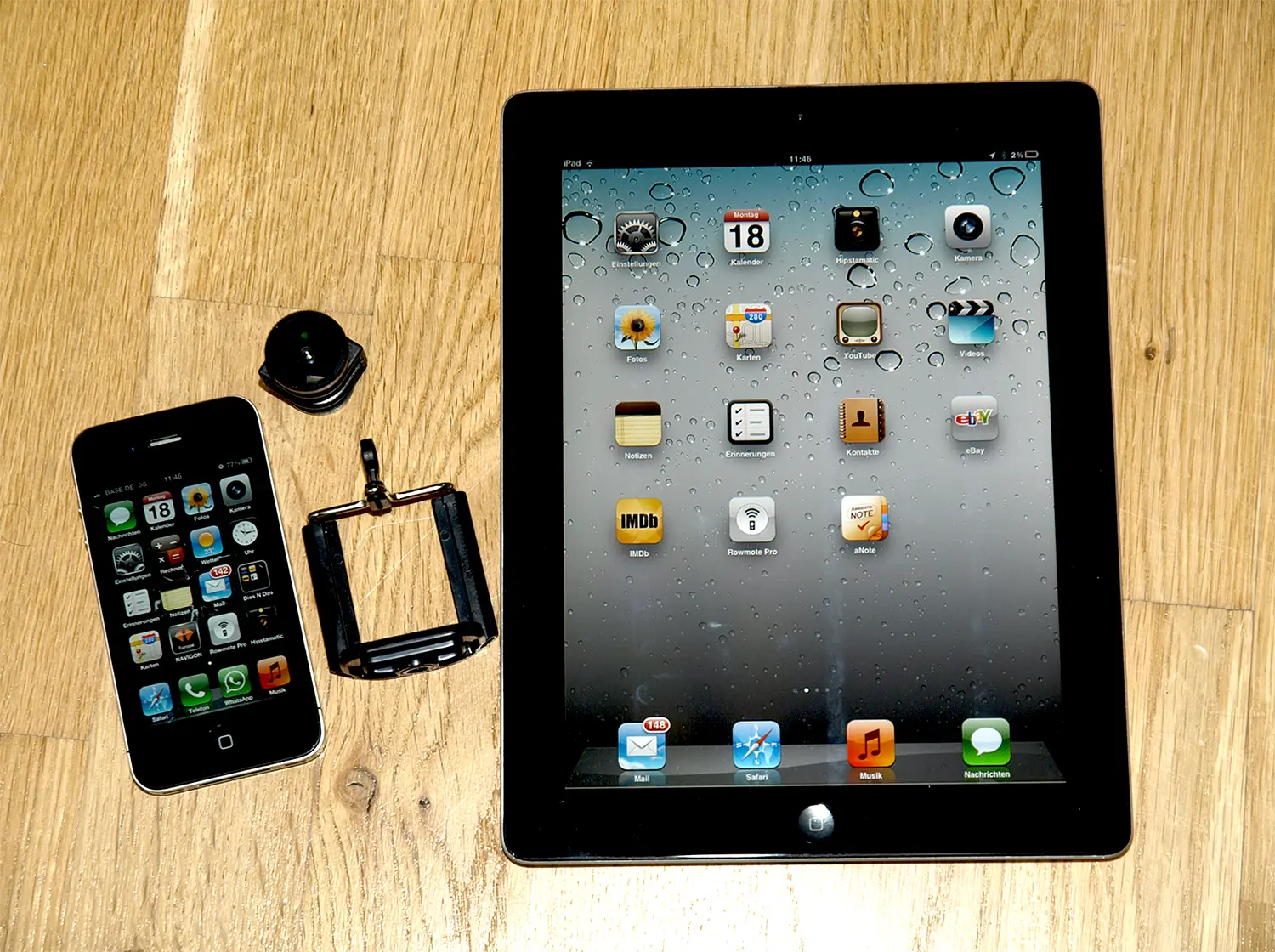
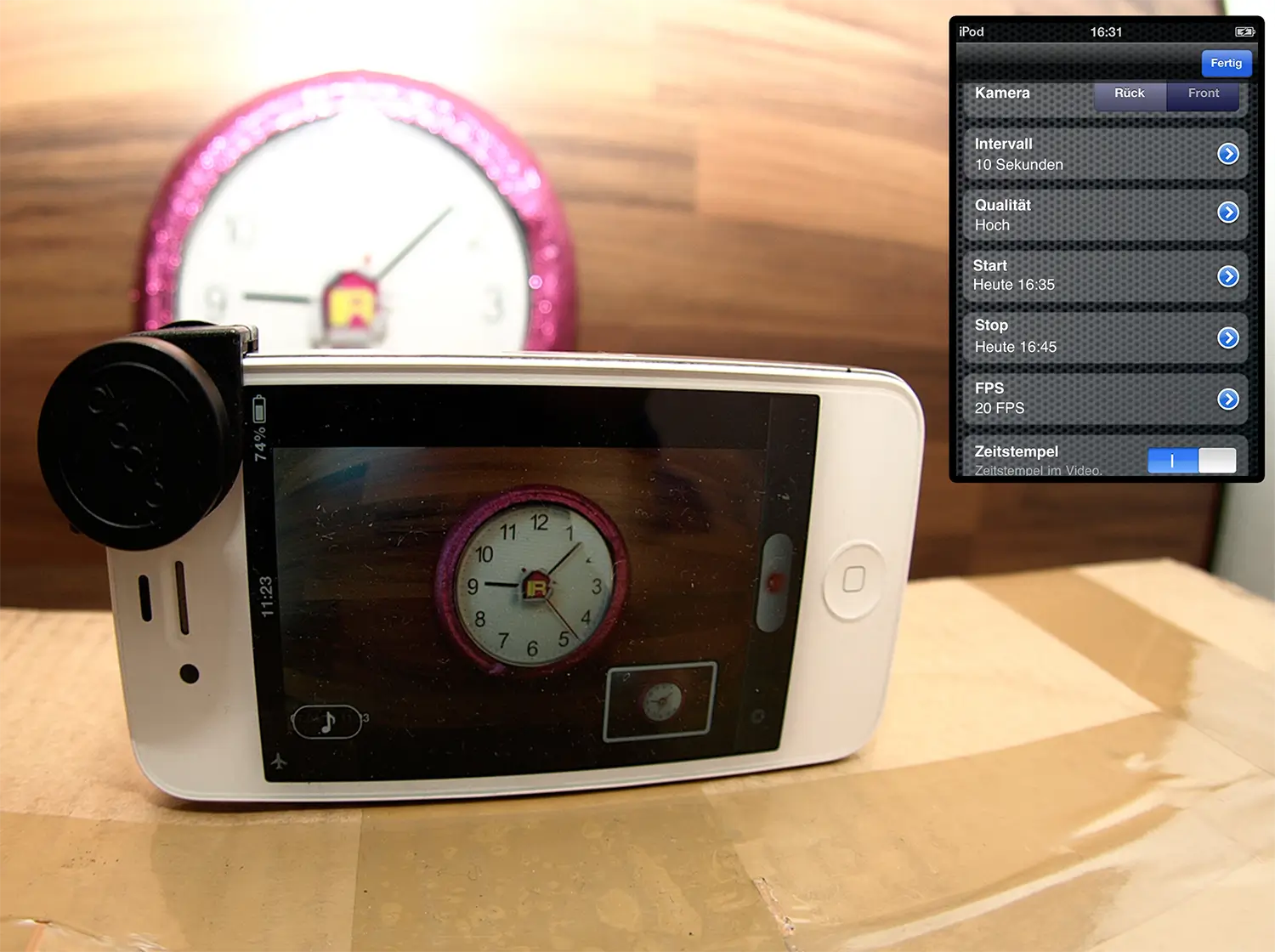
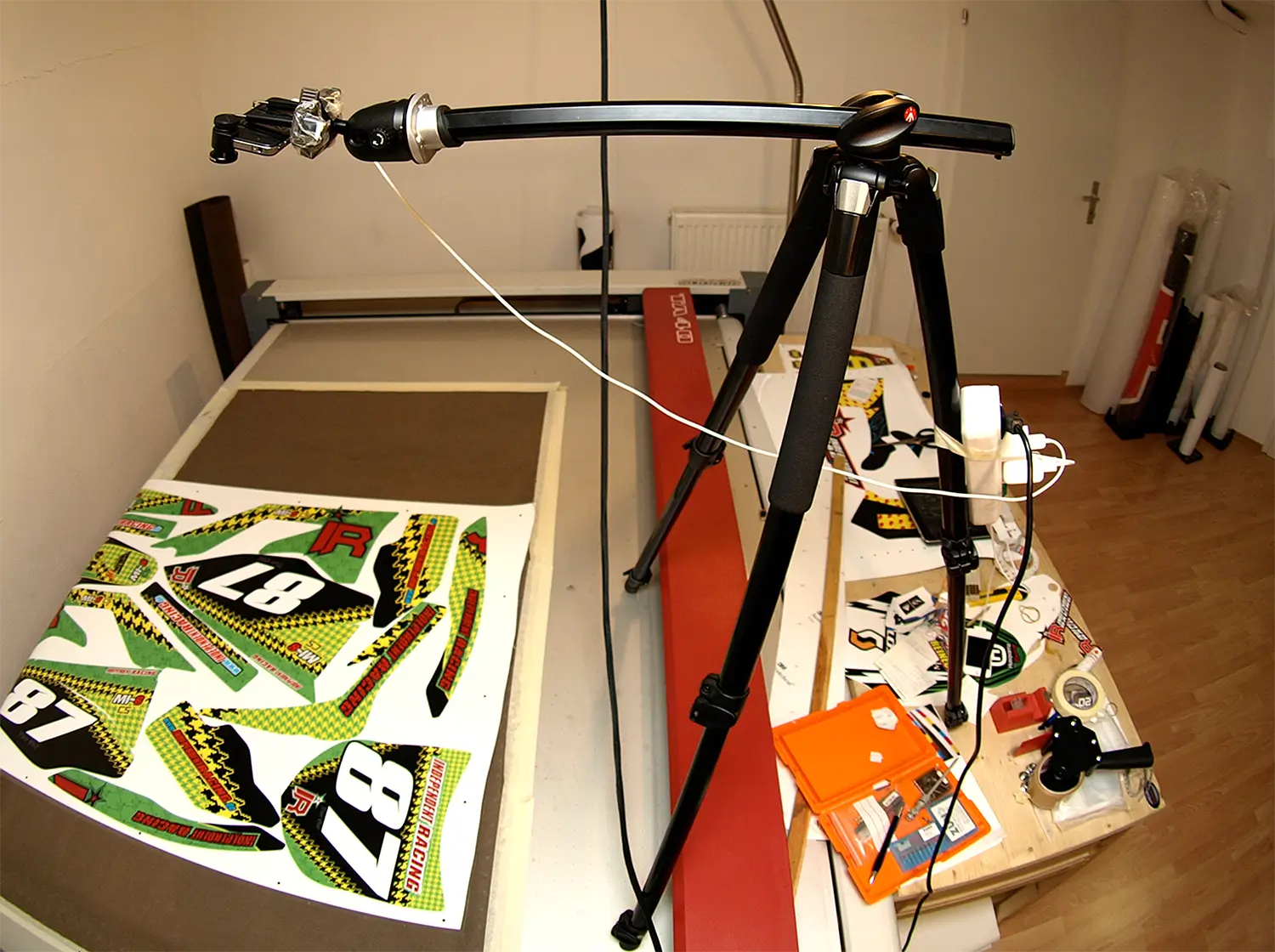
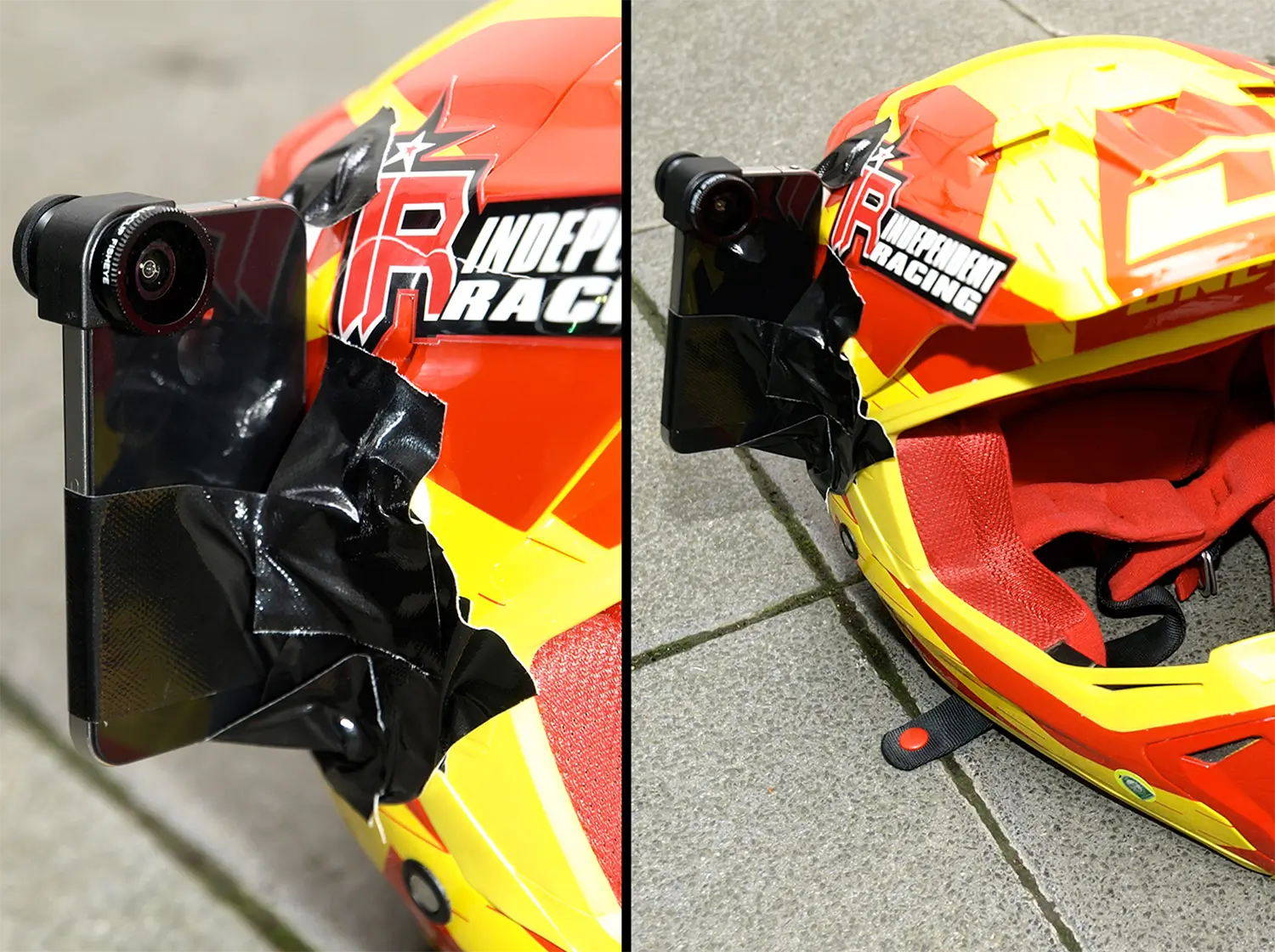
To keep the project simple and stay true to the smartphone concept, I kept the setup minimal. The native iPhone 4 lens was too wide and geared toward panoramas, which made close-ups difficult. I solved this by purchasing a €65 3-in-1 lens on Amazon. I used the 170° fisheye and 82° wide-angle options while skipping the macro lens, which significantly improved both my framing options and the overall image quality.
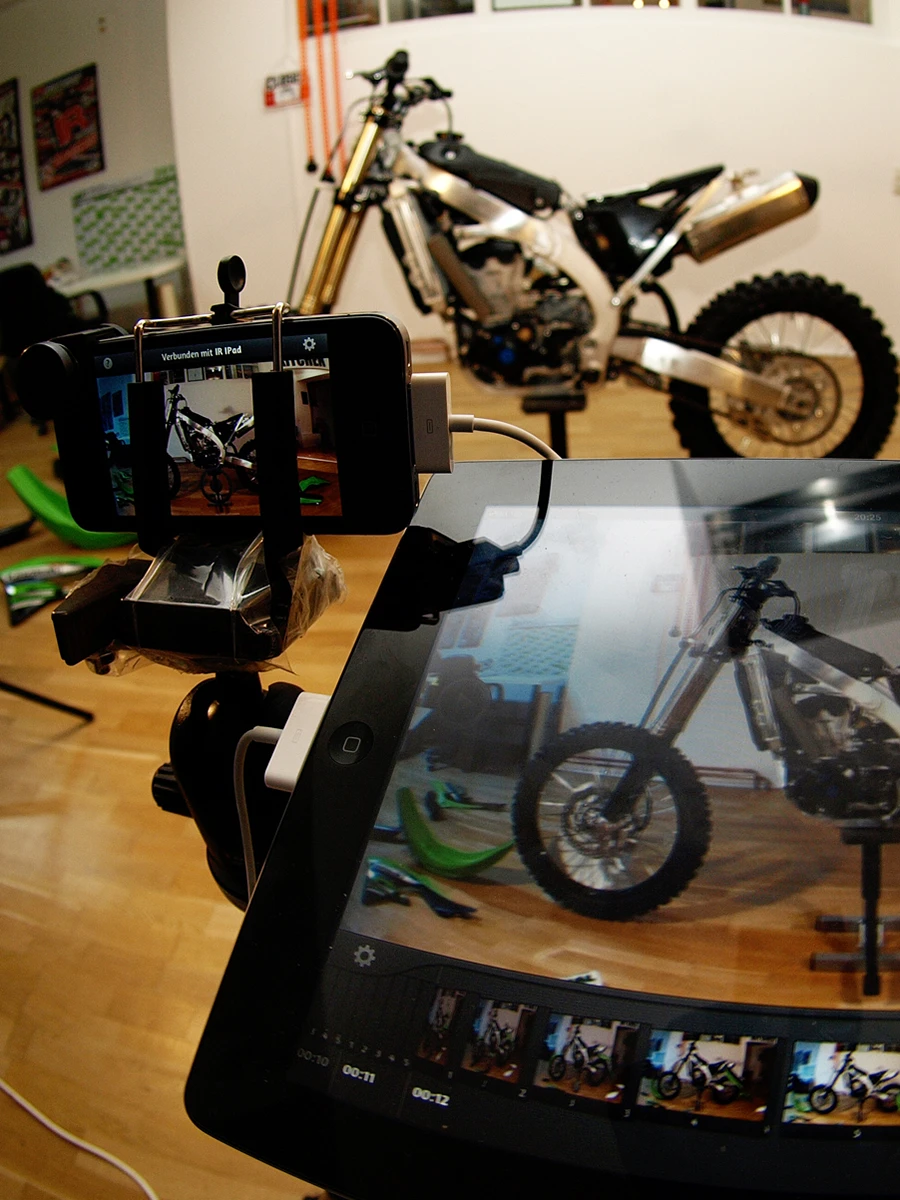
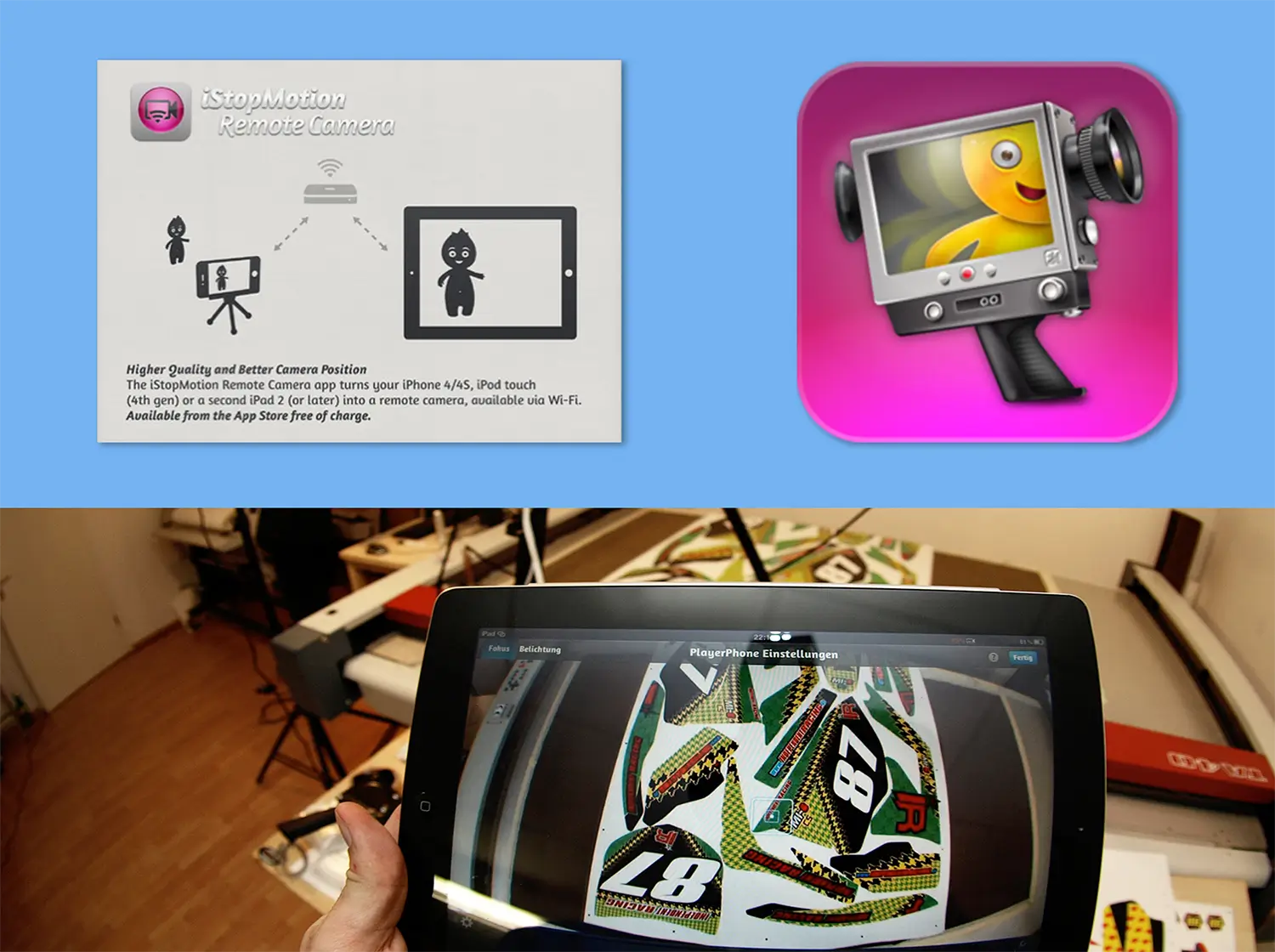
For the capture process, I used the iStopMotion app (€3.90) to link the phone to an iPad over a local Wi-Fi network. Photos shot on the iPhone transferred instantly to the iPad, allowing me to adjust frame duration and export directly from the archive, completely eliminating the need to assemble the frames manually in After Effects.
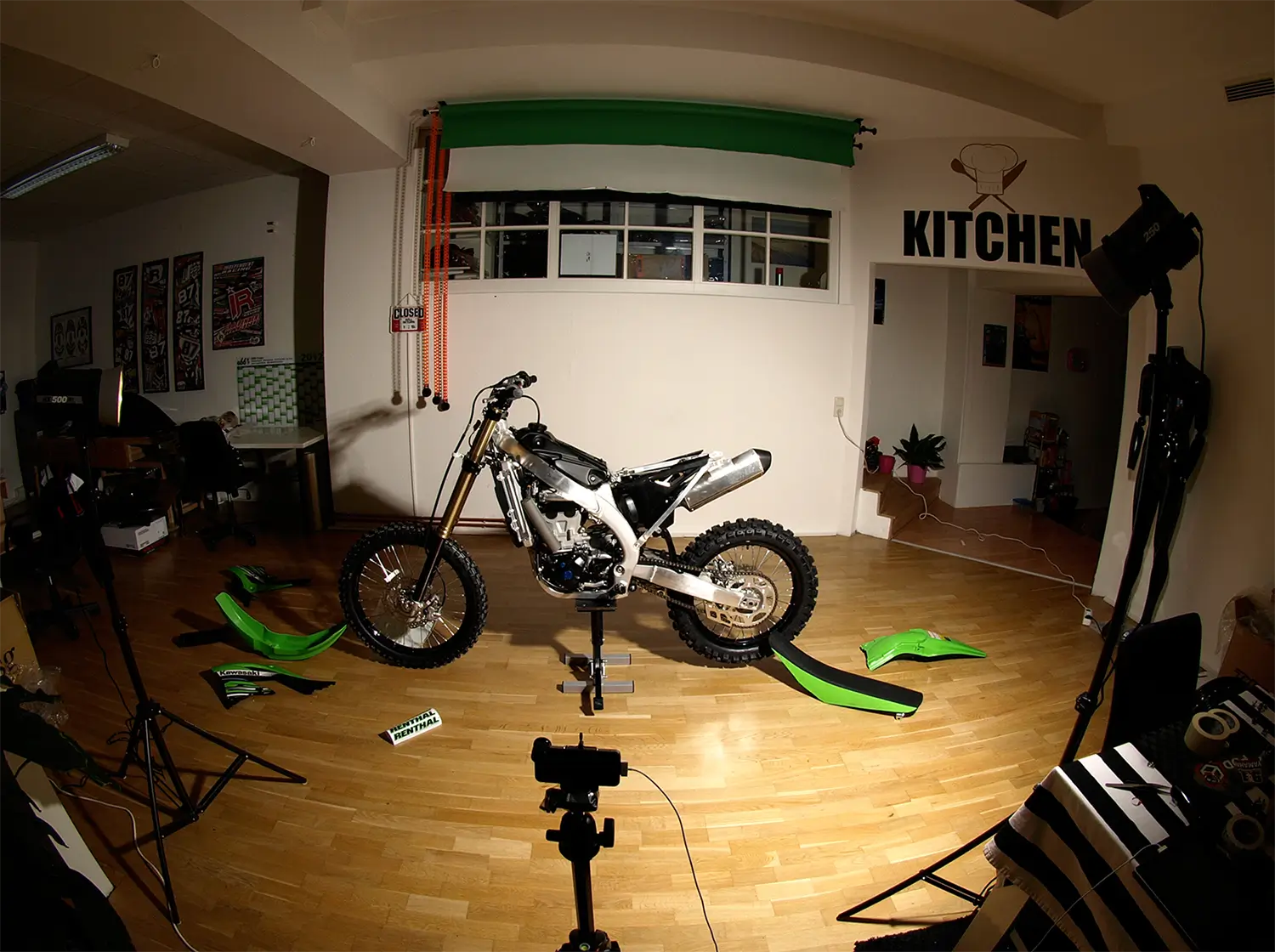
The physical production required three full days and nights of continuous work. Working as a team of two, we dismantled and rebuilt the motorcycle centimeter by centimeter, capturing a photo after every tiny adjustment. To ensure smooth, realistic on-screen movement, I frequently used double-sided tape to keep loose components stable.
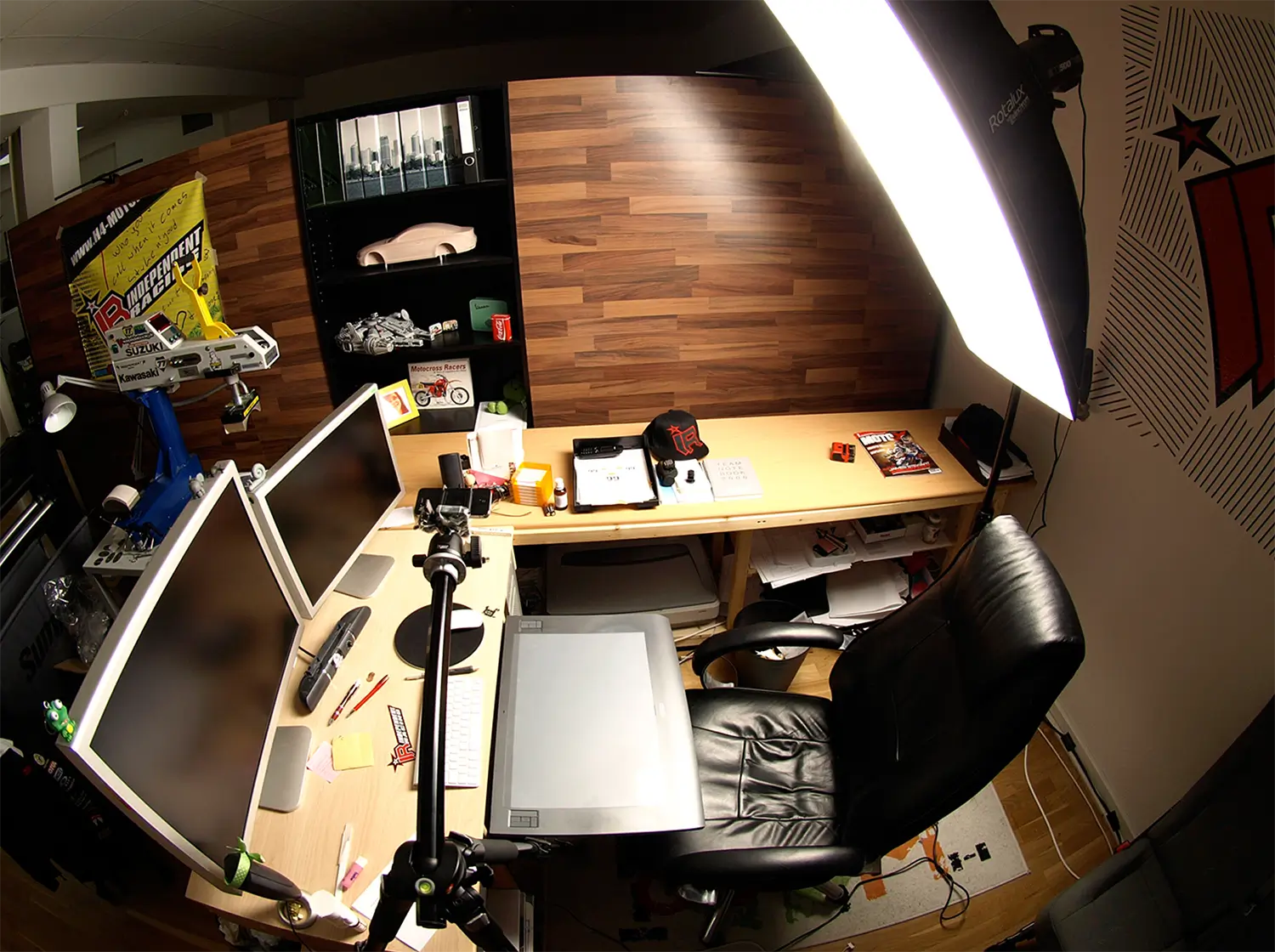
Managing the studio lighting was a major factor throughout the process, as the shoot regularly ran late into the night.
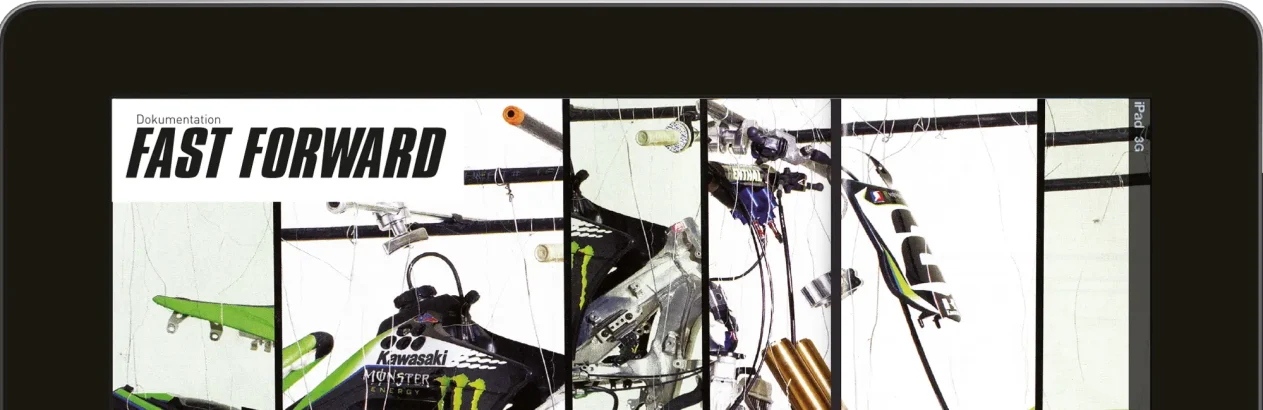
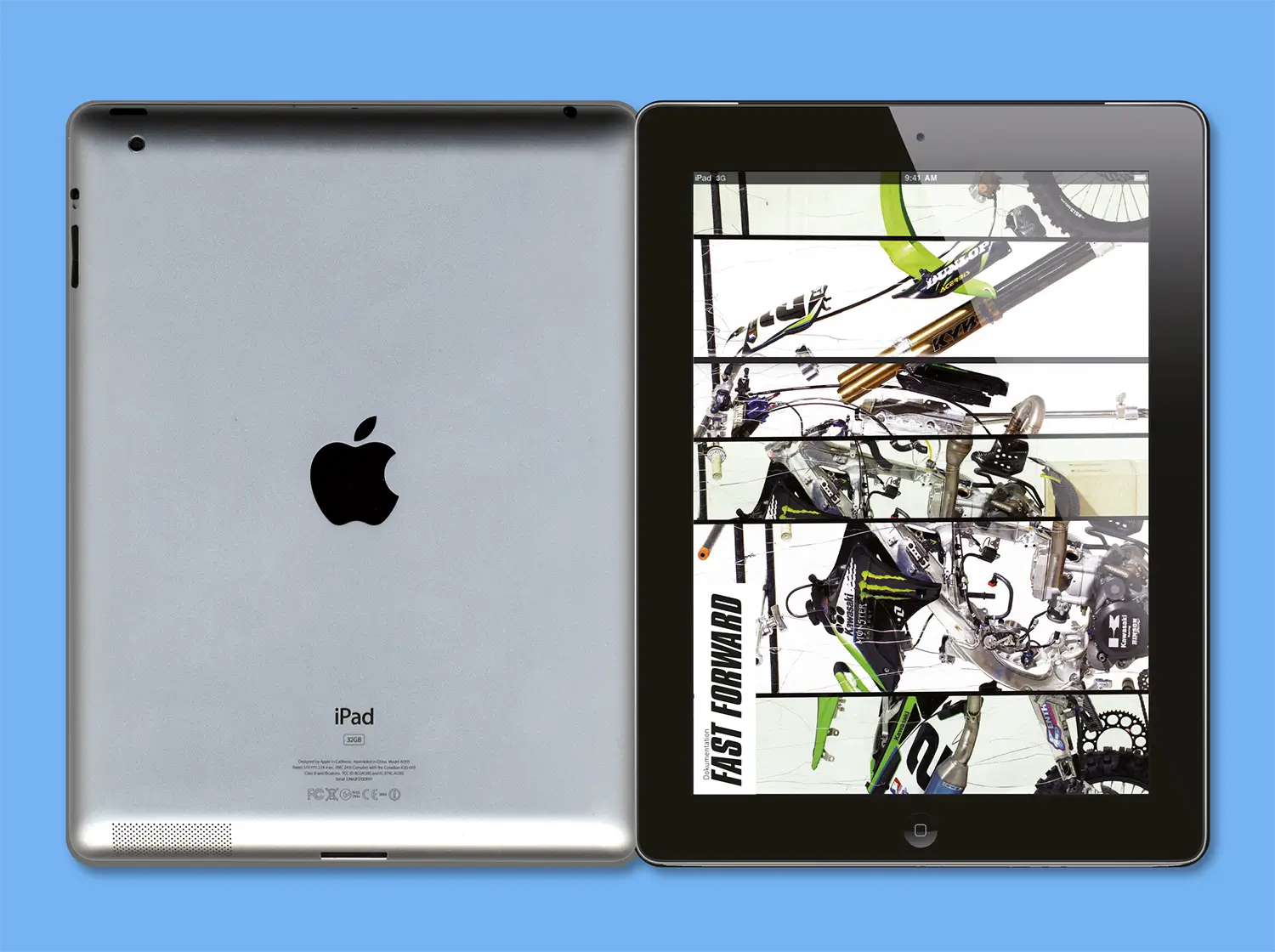
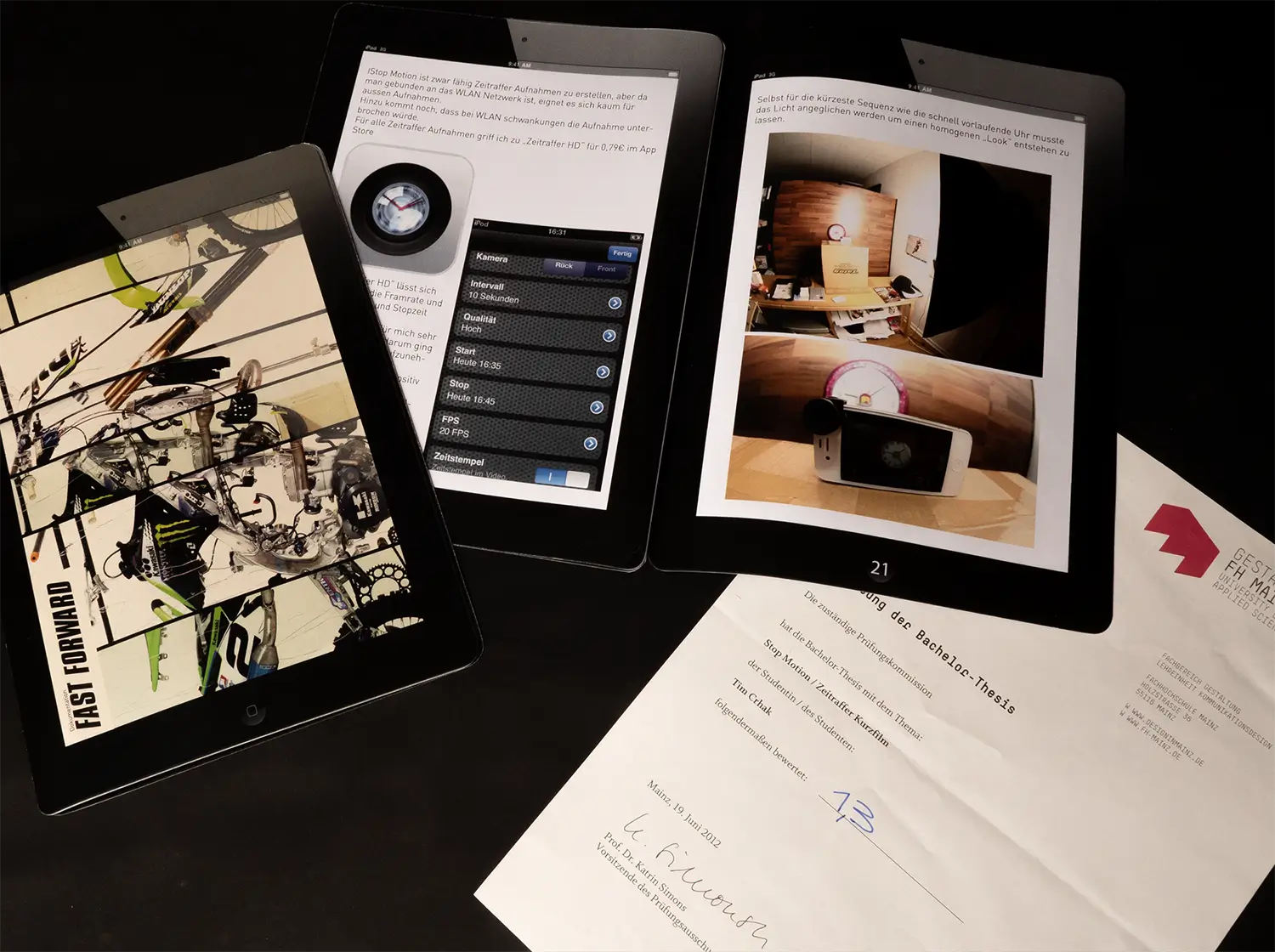
I made the handout documentation in the look of an ipad, printed on silver paper and for the cover Photo I scanned a motocross magazin hat actually had taken appart the same motorcycle I used and hung it up in pieces.
I received a 1.3 for this bachelor thesis and he finished film served as the very first commercial for Independent Racing.