My Story
Chapter two
A need for space.
By producing graphics and racing, my daily life was now dominated by one single topic: Supermoto. A thing most people haven’t even heard of. Motocross—maybe, but Supermoto? “Do you guys do backflips?”
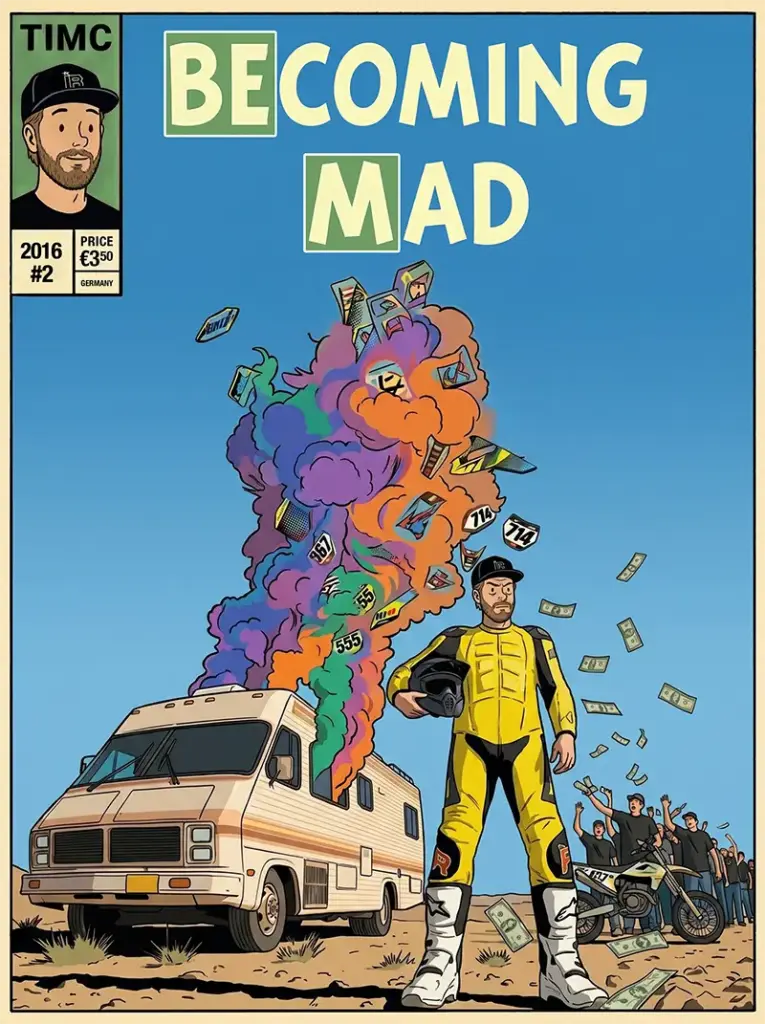
The name “Independent Racing“, my decal business, became a brand within the German and Swiss scenes spread solely through word of mouth. It felt good and to head home from the races on Sunday afternoons in the motorhome with a bundle of cash in the pocket.
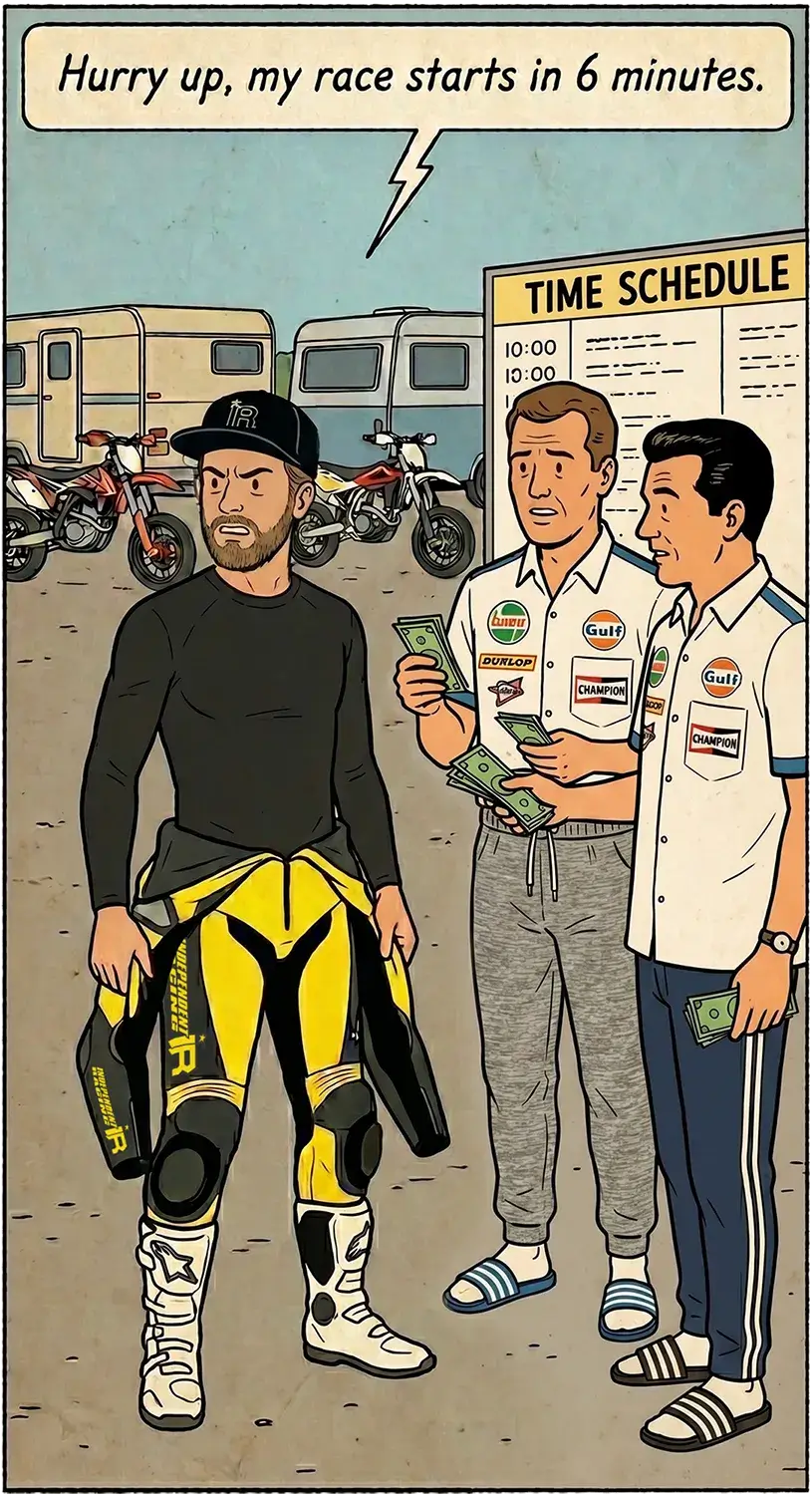
The racing itself became secondary. There was hardly any time for training due to studies and work; during race weekends, I spent the whole day wandering the paddock to collect orders or money, only to change for my start at the very last second.
But it didn’t matter, because I didn’t have to be fast anymore to have my place in the scene. I was the “decal boy,” and so I was known and needed.
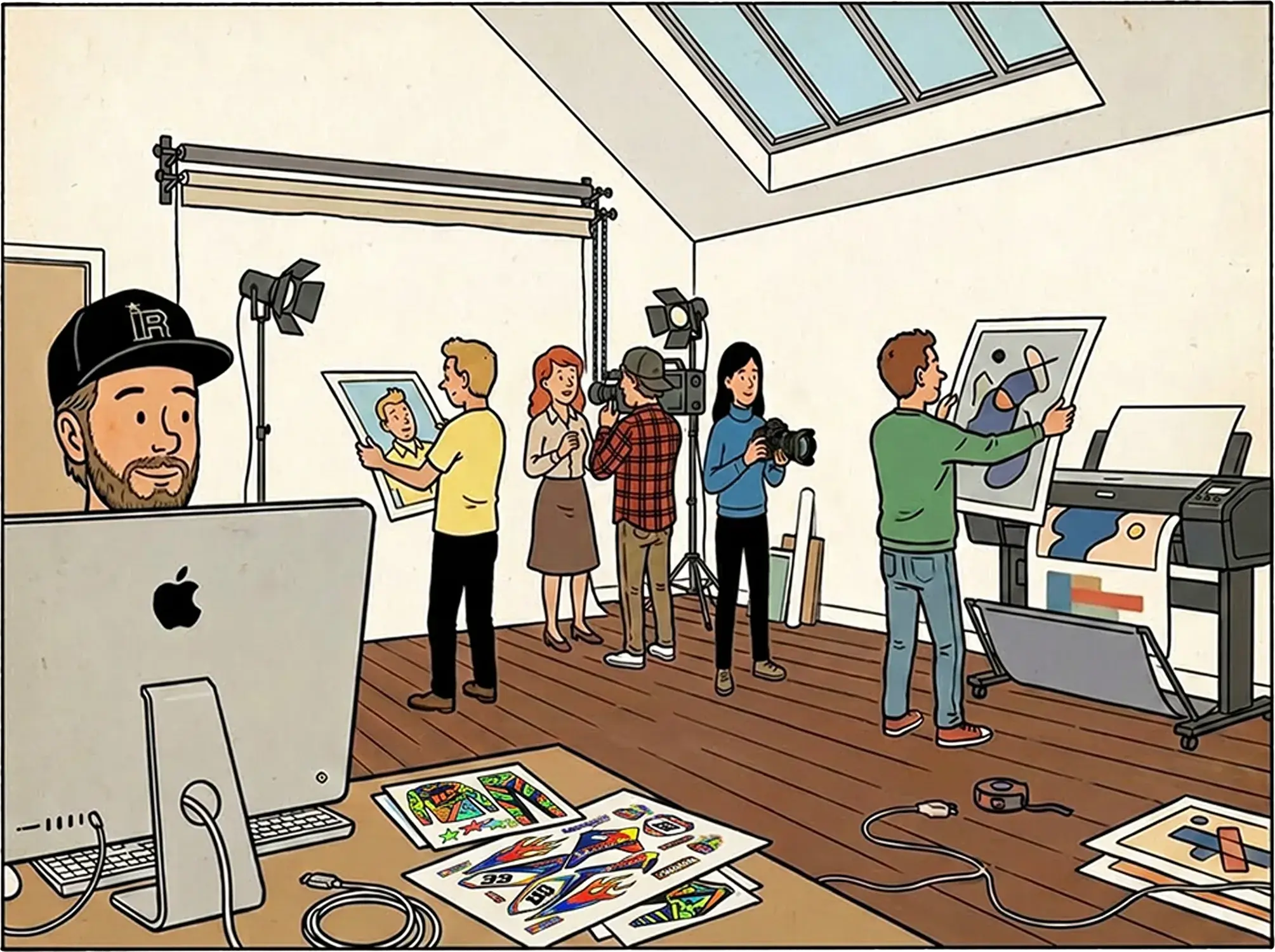
The constant commuting and small basement, made the desire for something larger, directly in Mainz grow, so my 22-year-old self went on a search for a combination of living and working. That saves on rent and also time, since I would then work right where I woke up. A former, already livable backyard dance studio of 109 square meters. The rent was okay and partly tax-deductible.
In my circle of university friends, word got around that I now had all the printing machines etc. in Mainz, and because there was a lot of space, the studio loft also served well for photoshoots when the university studio was occupied. It was a constant coming and going of all the classmates who needed something printed or took photos. In this way, my contacts at the university weren’t completely lost.
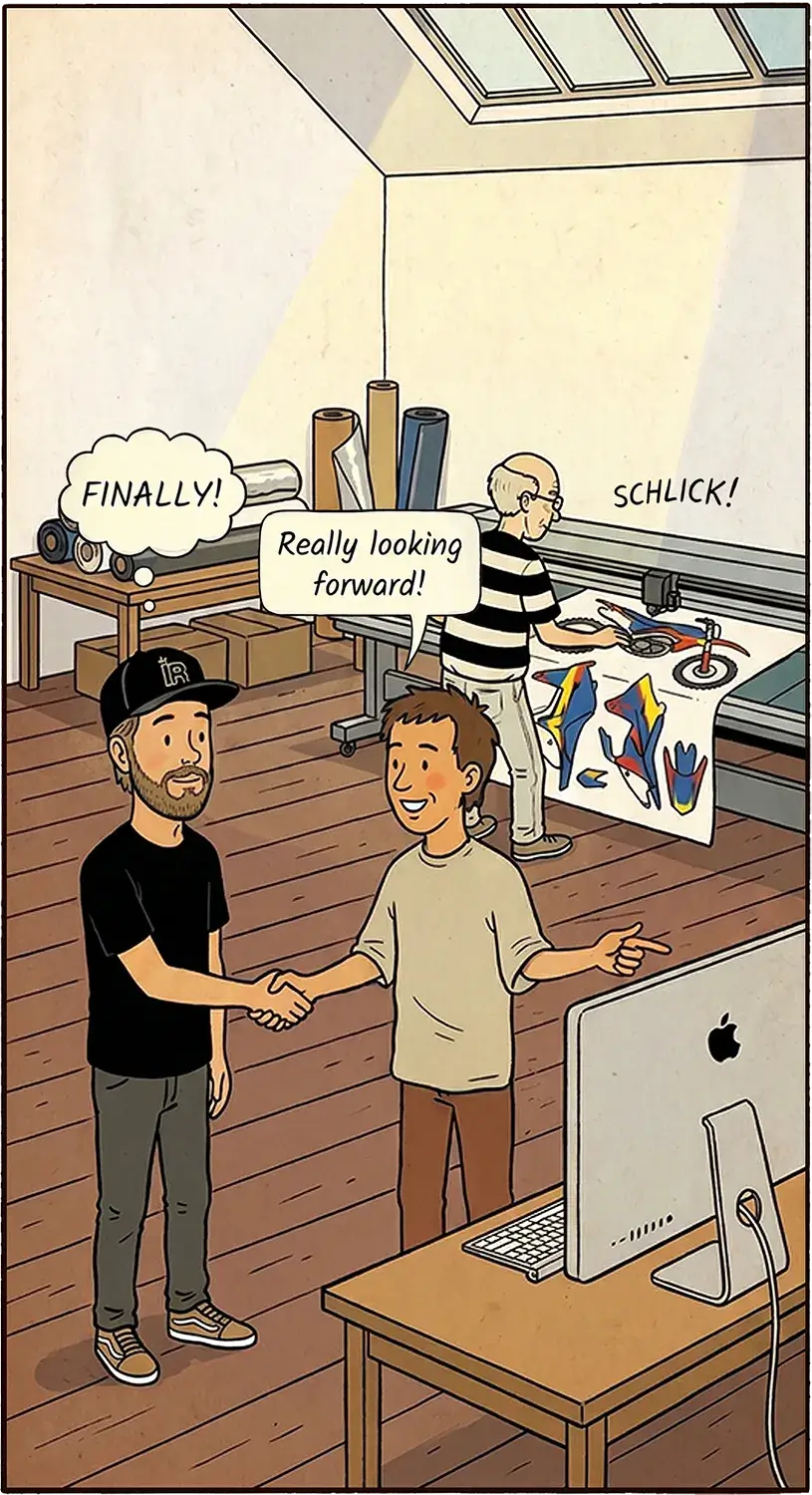
Now orders from the Motocross scene also started coming in—which I had previously had little to nothing to do with, but which is significantly larger, yet also structured a bit more stingily. A new machine, a flatbed cutting table, was needed. The production would then take 10 instead of the previous 25 minutes. Now I would have had some serious business spendings, at least for a „side business“. I printed graphics until late into the morning; my father helped me. At the university, I did the bare minimum, propping my eyes open with toothpicks. On the way to the races and between the heats, I tried to sleep, if someone didn’t just happen to want to order something.
It was becoming unsustainable. A former classmate, Gregor, heard about my situation and was interested in the tasks. From then on, he would take over all the graphic work. I could now devote myself more intensely to my increased workload of administrative tasks as well as completing all the work for my studies without permanent night shifts. Gregor felt at home with this type of design, as he was an active downhill mountain biker himself. My self created job was from then basically bringing in orders, bookkeeping, calculated margins, quotes and maintained steady contact with all dealers like a sales representative. My father would get more tasks in production—nice work for a retiree.
Why all these discounts?
The business was supposed to grow so that I could make it big as a “real company” after graduation. To date, the Independent Racing website was a portfolio page created in 2008 with some software of the time—visually appealing, technically unsustainable. 🙂 independent-racing@t-online.de was the contact for many years.
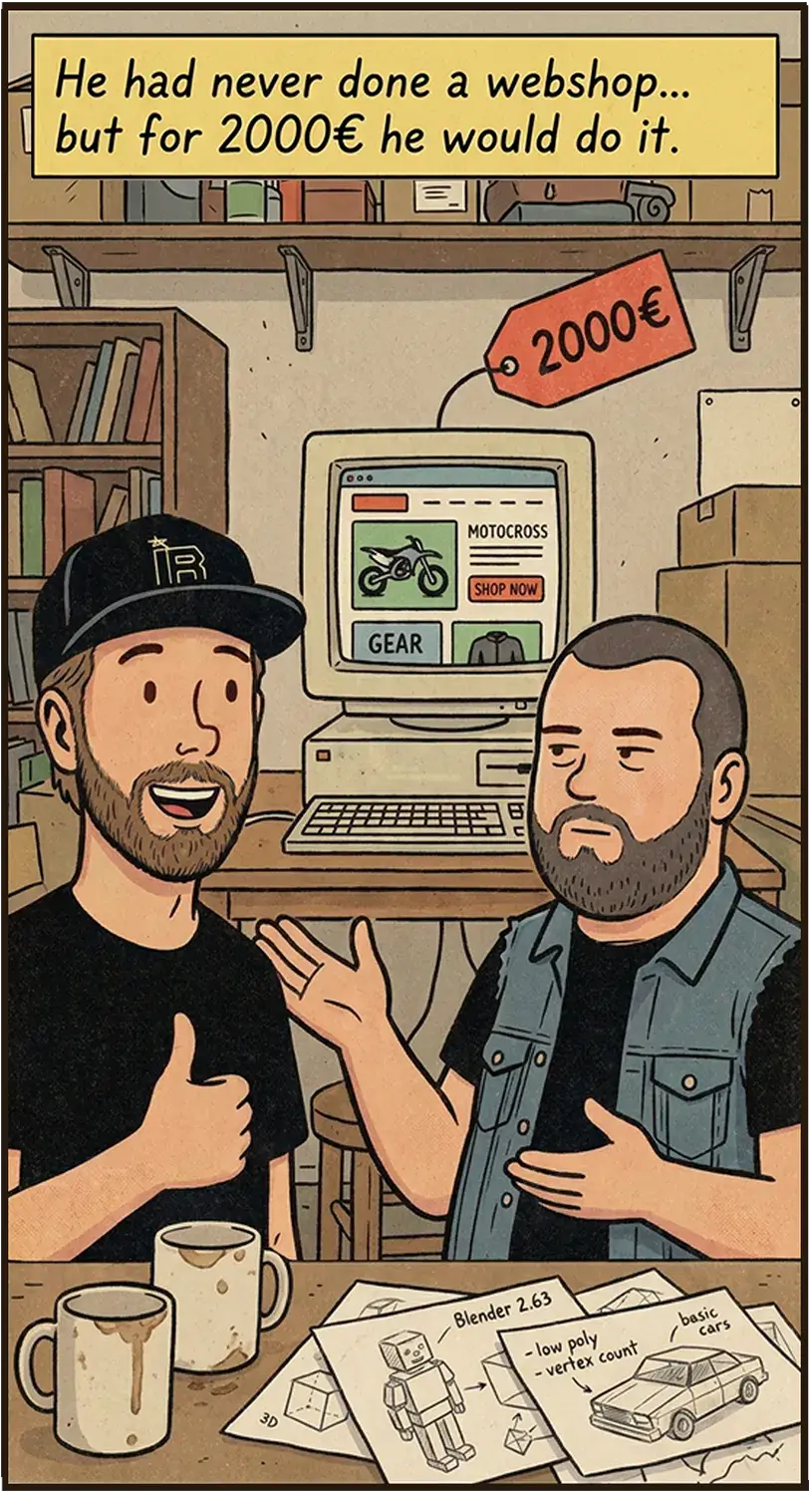
In mid-2010, a webshop was needed. Shopify etc. didn’t exist yet. Through an acquaintance, I got the contact of a 3D artist who had no jobs and was therefore building websites. “I’ve never done it before, but I can give it a try” was the conclusion of our first conversation. For €2,000, he built the shop. This website and the 3D artist without jobs would form the foundation for the IR shop until 2019.
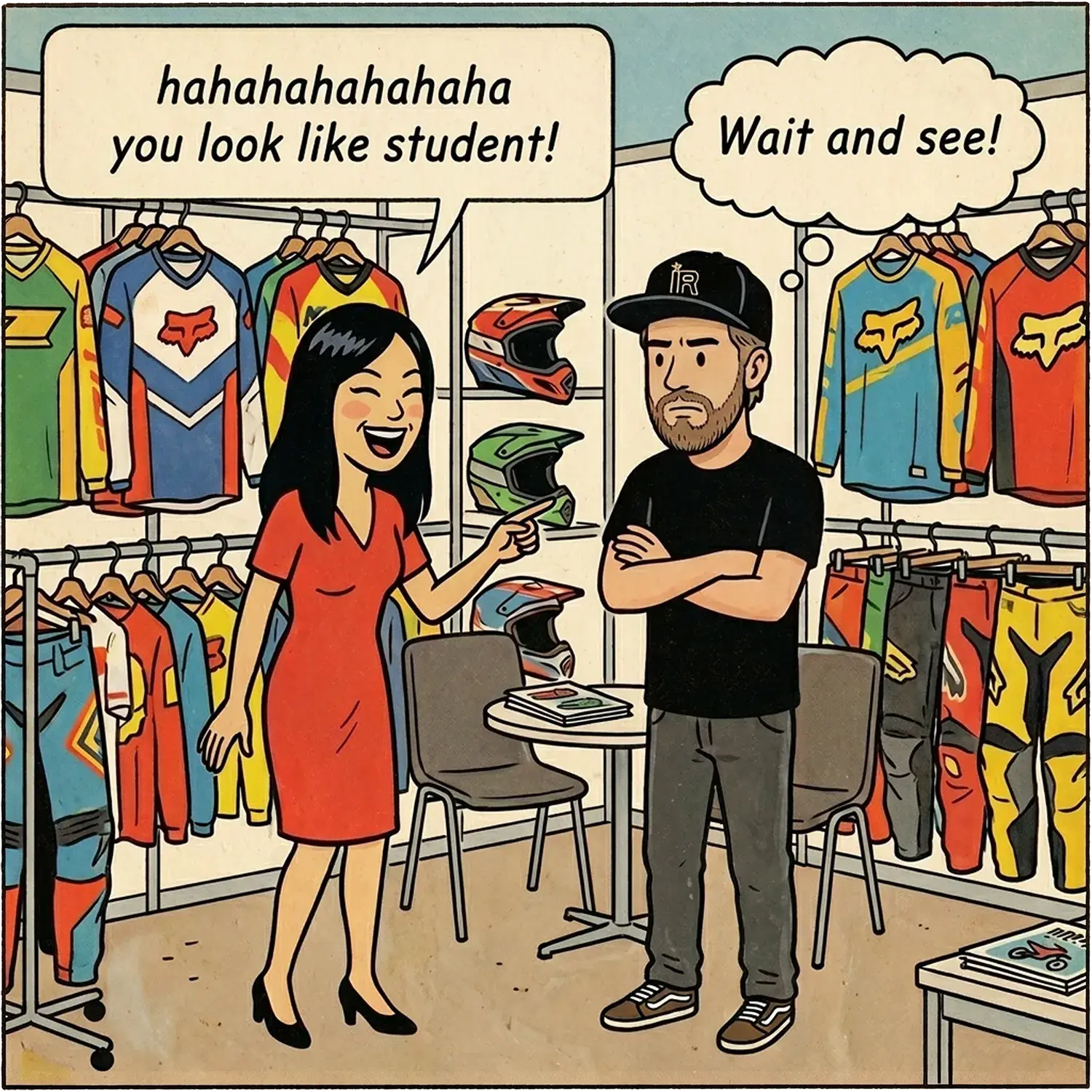
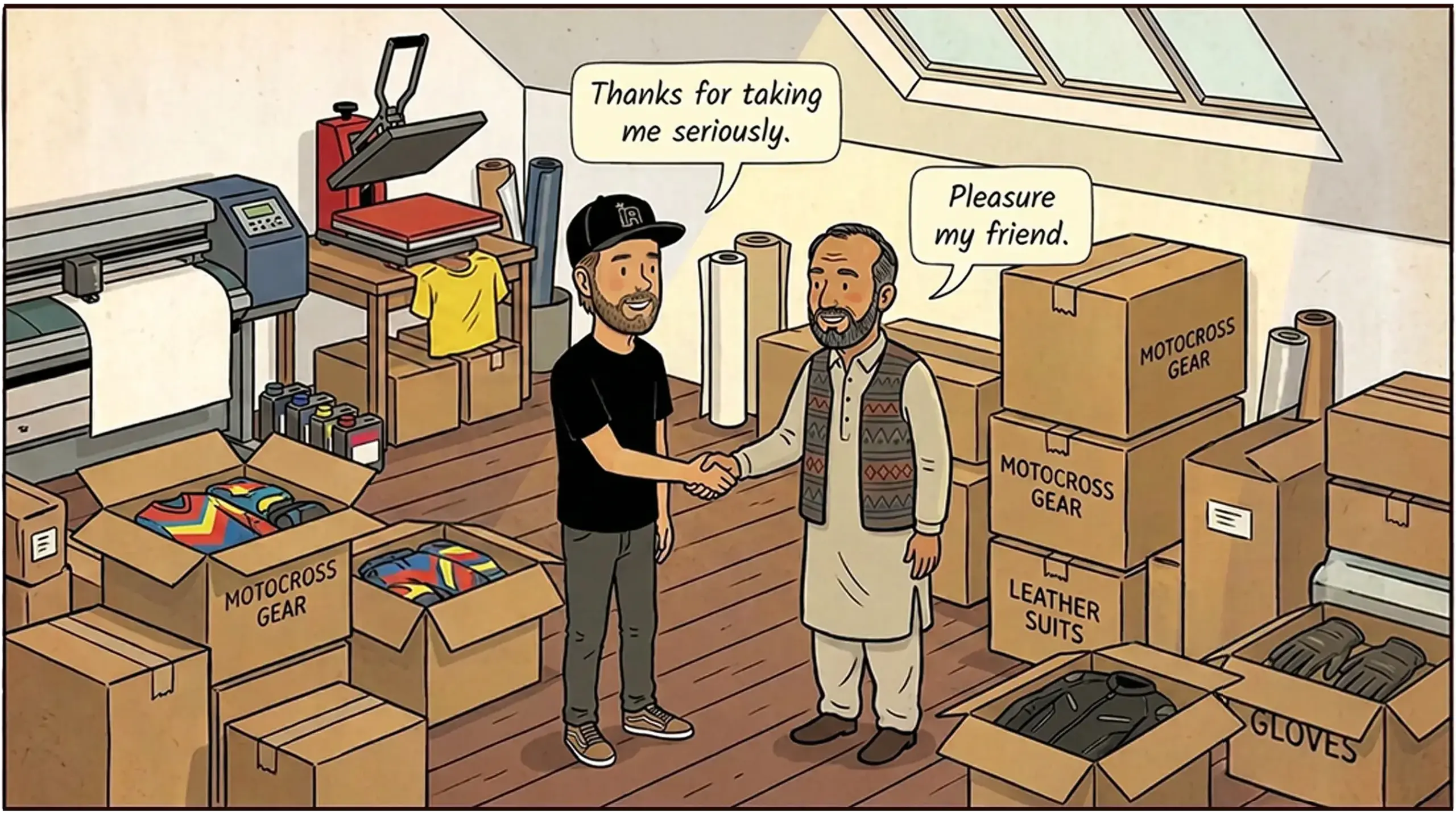
In 2011, we threw Motocross gear and leather suits onto the niche markets. Gregor took over the design from A to Z, I registered on alibaba.com and searched for producers with moderate success. The order quantities were too large. At a trade fair appointment with a Chinese manufacturer, the contact lady started laughing out loud and said, “You look like student”—well, I was. Ultimately, a Pakistani producer took us seriously, and we produced. A big name in the racing scene once privately advised me not to manufacture Motocross clothing; the market was complicated and not profitable. But what did he know? He turned out to be right.
Thinking the clothes were a new direction and more and more disgusted by the business practices of the racing customers, I was ready to give up the graphics thing entirely. Charging a €45 design fee had to be justified, a graphic kit was rarely sold at full price and new manufacturers would pop up from everywhere, always making it a bit cheaper than the other. The IR website was now a shop system, but 70% of orders still came in manually. The time spent on communication was immense; the error rate due to insufficient info was enormous. I preferred to handle all email correspondence myself, which would also take up 70% of my day. In my head, however, this was only an accessory to my actual work.
About 1.5 years left until the end of my studies. The marketing for IR clothing was supposed to happen within the framework of a university course and thus kill two birds with one stone. Magazine ads and website banners were the way to go. For a few years after that, a Supercross team was equipped with gear and a booth was set up at the biggest race of the season. The effort was completely out of proportion. Dealers would only buy the established brands, and our margin didn’t allow for big leaps in price. So I stuck with what brought in money, graphic kits.
Force-fed evolution.
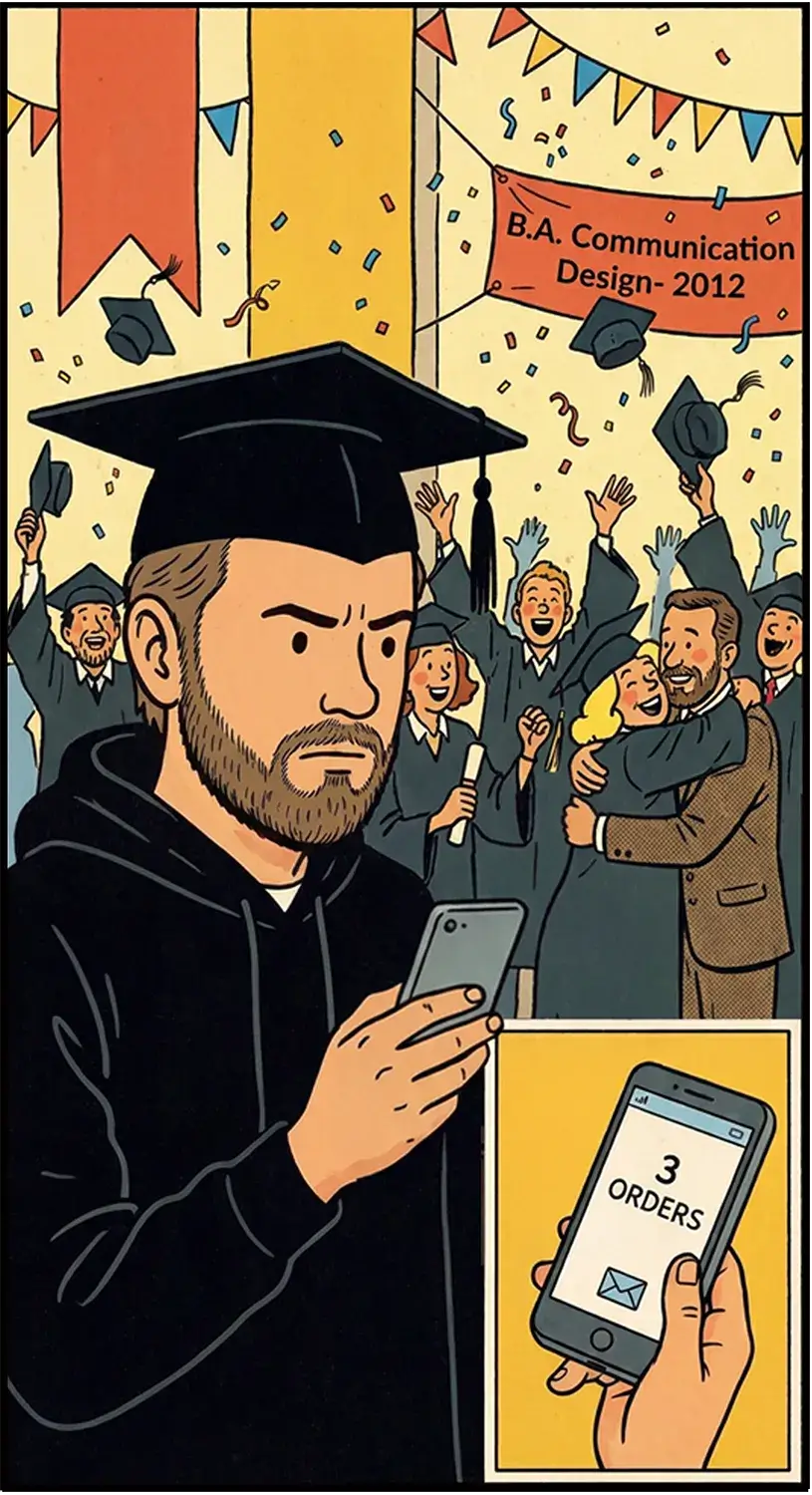
In 2012, I finished my Bachelor’s in Communication Design. My thesis was a stop-motion animation that shows the process of graphics production in an exaggerated way, from the idea to the execution of the new design on the track. I was living in a mono-cosmos after all. This work was graded 1.3, and served simultaneously as the first IR promotional video.
In the shop, we carried graphics for competition models of all brands. Everything else personally didn’t interest me; on the street, I rode a Vespa. All graphics were offered with the logos of the respective brand. Trademark infringement? No way! And actually, this is tolerated by all brands to this day. Except… a small Austrian manufacturer. Shortly before Christmas 2012, a cease-and-desist order from KTM arrived. I immediately called the phone number on the letter and was indignant about what that was all about, every graphics manufacturer did it that way. A week later, Independent Racing was a KTM licensee and thus one of the 3 licensed companies in Germany with the permission to place KTM logos on various printed materials. All the others didn’t do it anymore.
At peak times, we were five people at Independent Racing, often rotating acquaintances or freelancers. The business was still labor-intensive, but over the years I had learned everything else that belongs to such a business. Learning by failing, right? My main task now was to run the business as cost-effectively as possible, to be able to sell at the expected prices and still be profitable.
The KTM license brought little at first.